
Usually not, unless you hold a license or Counseling Compact privilege in the state where the client is physically located during the session. A few states have narrow temporary practice allowances for existing clients. Otherwise, check the client's safety, give local crisis resources, reschedule for when they are home, and document what happened.
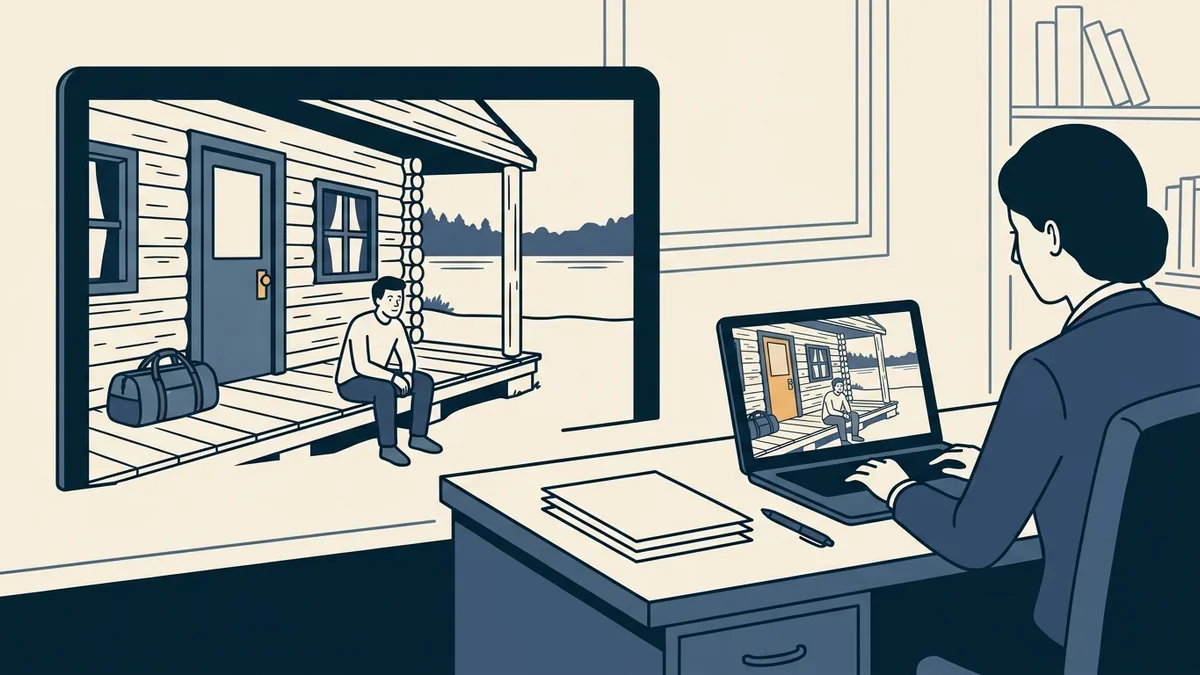
It is 4:00 on a Thursday. Your long-standing client opens the video call, apologizes for the background, and mentions that the family drove up to the in-laws' place in another state for the week. They are calm, the work is going well, and they would very much like to keep the appointment.
Here is the uncomfortable part. If you are not licensed in the state where that cabin sits, and you do not hold a Counseling Compact privilege to practice there, providing counseling in that session is very likely unlicensed practice in that state.
Why does the client's location decide it?
State licensing laws regulate counseling delivered to people in the state. Telehealth does not move the session to your office; it delivers your services to wherever the client is. The Counseling Compact Commission puts the rule plainly in its own FAQ: counselors "must have a license or a privilege to practice in the state where the client is located." State boards that have addressed telehealth take the same position, and some say so in rule.
Residence, the address on the intake form and the state that issued the client's insurance card do not change this. We cover the distinction in more detail in location versus residence.
What are your actual options in the moment?
- Check safety and reschedule. A brief contact to confirm the client is safe, give crisis resources that work where they are (988 works nationally), and book the next session for when they are home. Keep it short and do not slide into therapy.
- Use a privilege or license you already hold. If the client's location is a state where you hold a full license, or a compact privilege, proceed and document the location.
- Check for a temporary practice allowance. A handful of states let an out-of-state counselor continue with an existing client for a limited period, sometimes only after notice or registration. Most do not. Our temporary practice table lists the provisions we could verify against primary sources; confirm with the board before relying on any of them.
What you should not do is hold the session and leave the location out of the note. If a complaint or a payer audit ever touches that week, the note is your record of how you handled it.
Does the Counseling Compact help here?
Sometimes. A privilege to practice works only between member states that are actually issuing privileges, and it is issued state by state. If your home state and the vacation state are both live, and you obtained a privilege for that state ahead of time, the session is covered. You cannot apply mid-session, and a privilege has its own fee and in some states a jurisprudence exam. The Counseling Compact hub tracks which states are issuing.
How do you keep this from happening again?
Put a travel clause in your telehealth informed consent: you can only provide services while the client is in a state where you are authorized to practice, and you will confirm location at the start of each session. Then ask the question every time. Clients quickly learn to mention trips in advance, which turns a mid-session surprise into a scheduling conversation two weeks out.
Watch for patterns. One vacation is a reschedule. A client who spends every August at the same cottage, or every winter in the same Sun Belt city, is telling you which second state might be worth adding. White Glove MFT's traveling clients protocol walks through vacations, business trips and snowbirds, and the reasoning applies equally to counselors.
If the same state keeps coming up, a privilege or a second license may pay for itself. Our pricing page lists what we charge to help with either.
Common questions
- My client is only away for one week. Does a short trip really matter?
- Yes. Licensing laws do not have a general grace period for short trips. A few states have specific temporary practice provisions with their own conditions, but absent one of those, a session with a client located in a state where you are not authorized is a problem regardless of how short the stay is.
- Can I just do a quick check-in instead of a full session?
- A brief safety check and rescheduling call is generally treated differently from providing counseling. Keep it to confirming safety, sharing crisis resources for where the client is, and setting the next appointment. Document it as such.
- Does it matter if the client's insurance is from my state?
- No. The insurer's state does not determine which license you need. The client's physical location during the session does.
- Can I use the Counseling Compact for a client on vacation?
- Only if both your home state and the client's location are issuing privileges and you already hold a privilege for that state. Privileges are issued per state through CompactConnect before you practice there.
Need Help with Your Application?
We handle the counselor licensing process end-to-end — eligibility screening, documents, board follow-ups, and tracking.