
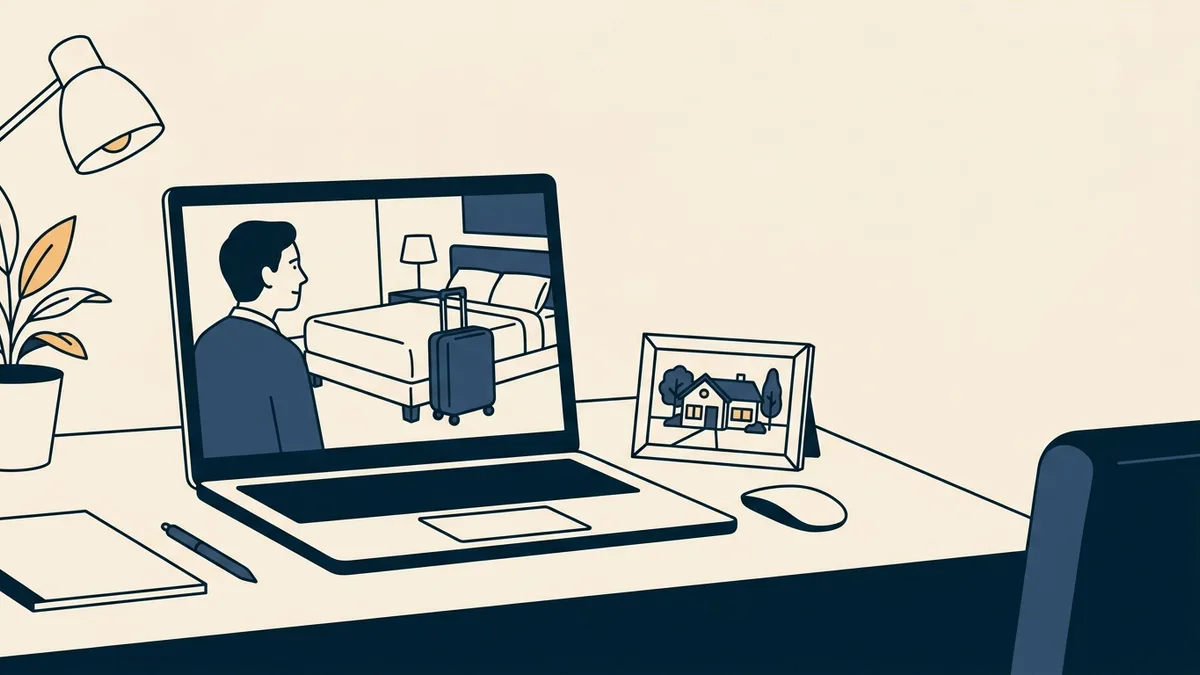
For licensure, the state where the client is physically located during the session decides which license or compact privilege you need. Residence, mailing address and the client's insurance state do not change that. Residence still matters for other questions, such as your own compact home state, insurance networks and where a complaint may be filed.
Short answer first: for licensure, physical location at the time of the session controls. Where the client lives, votes, pays taxes or gets mail does not.
That sounds simple until you meet the cases that make it hard: the client who lives in your state but works three days a week across the river, the graduate student whose permanent address is still a parent's house, the client who moved months ago and never updated the chart. Each of them has a residence. Only one fact matters for whether you may provide counseling in that hour, and it changes when they get in the car.
Where does the location rule come from?
Counseling licensure is state law, and states regulate services delivered to people within their borders. The Counseling Compact Commission's FAQ states the working rule directly: a counselor "must have a license or a privilege to practice in the state where the client is located." Medicare draws the same line, requiring the practitioner to be licensed in each state where services are rendered.
Florida's telehealth statute, section 456.47, is a useful example of how a legislature writes it down. It says the delivery of health care services by telehealth "is deemed to occur at the place where the patient is located at the time the act is performed or in the patient's county of residence," and it lets Florida patients bring a complaint in their home county. Notice that Florida reaches both: a Florida resident sitting in Florida and a person physically in Florida for the session. A counselor reading that statute should conclude that location is the floor, not the ceiling, of a state's interest.
So does residence ever matter?
Yes. The ACA Code of Ethics, standard H.1.b, tells counselors who practice at a distance that they "may be subject to laws and regulations of both the counselor's practicing location and the client's place of residence," and that clients should be told the legal limits of counseling across state lines. Read that as a warning to satisfy more than one jurisdiction, not as permission to pick the convenient one. Residence also drives these questions:
- Your own home state under the Counseling Compact is your primary state of residence, and it determines whether you can use the compact at all. That is the counselor's residence, not the client's.
- Insurance coverage follows the plan, which may have its own network or out-of-area rules.
- Venue for complaints may include the client's home county, as Florida's statute shows.
- Mandatory reporting and duty-to-warn questions generally track where the client and any third party are, so a client who lives in one state and is sitting in another can raise two sets of rules.
What should you record?
Record the client's physical location at the start of every telehealth session, as a city and state at minimum. Ask; do not infer it from the IP address or the background. Keep the residential address on file separately for billing and records. When the two diverge, you will see it in the note, which is exactly where you want to see it.
If clients are regularly sitting somewhere other than home, the next reads are what to do when a client is on vacation and options when a client moves. For counselors who want the authorization to follow the client, the Counseling Compact covers member states that are issuing privileges, and a full license covers the rest.
Common questions
- My client lives in my state but takes sessions from their office in another state. Which license do I need?
- The license for the state where the office is, during those sessions. Residence in your state does not cover sessions delivered while the client is physically across the line. Schedule sessions for when they are home, or obtain authorization in the second state.
- Can I rely on the address in the chart?
- No. Ask for the client's current location at the start of each telehealth session and record it. The chart address is a residence; it says nothing about where the client is that afternoon.
- Does Medicare follow the same rule?
- Yes. CMS requires a practitioner to be licensed in each state where services are rendered, and for telehealth that means where the beneficiary is located.
Need Help with Your Application?
We handle the counselor licensing process end-to-end — eligibility screening, documents, board follow-ups, and tracking.